معركة قنجال (( قنجال زاوه ))
تاريخ النشر على الموقع 09/10/2013
| التالي مقالة من موقع AdigaStars الا ان الكاتب الاصلي غير معرÙ. الرجاء ممن لديه اي معلومات عن االكاتب، او عن هذه المعركة وأهميتها بالذات ارسال المعلومات لنا ليتسنى نشرها للÙائدة العامة |
ÙÙŠ مقالتنا هذه ØŒ من المعارك المشهورة ÙÙŠ تاريخ القبرطاي الشراكسة ØŒ سو٠يدور الØديث Øول Øدثين تاريخيين وقعا ÙÙŠ مكانين مختلÙين Ùˆ بزمانين ÙŠÙصل بينهما عام واØد، لكنهما يرتبطان مع بعضهما ارتباطاً وثيقاً ØŒ ÙˆØ§Ù„Ø£ØµØ Ø£Ù† نقول : إن نتائج الØدث الثاني رسمته تÙاصيل الØدث الأول . وللأس٠الشديد لم يربط المؤرخون هذا بذاك ØŒ ولكن دعونا نستعرض ما جرى :
لقد أجمع المؤرخون جميعهم أن معركة /بالتاÙا / التي وقعت عام 1709 Ù… والتي شارك Ùيها 42000 جندي روسي زجّهم بطرس الأول مقابل 30000 جندي سويدي كانوا مع الملك كارل السابع ØŒ هي المÙØªØ§Ø Ø§Ù„Ø°ÙŠ ÙØªØ Ø§Ù„Ø¨Ø§Ø¨ على مصراعيه للوصول إلى النتيجة الØاسمة والنهائية للØرب الدائرة ÙÙŠ الشمال .
ومهما قيل عن الØركات التكتيكية والاستراتيجية للجيشين المتØاربين وكذلك الخداع والدهاء العسكري الذي تمتع بهما القيصر الروسي ØŒ وكذلك مواهبه العسكرية الÙذة وهلمّ جرَّ مما قيل وأشيع بعد ذلك ØŒ تبقى Øقيقته أن الجنود الروس كانوا أكثر بكثير من مجموع ال (42000 ) مقاتل . Ùلقد وصل عددهم إلى (80000) جندي ØŒ ثم كان هناك عامل آخر لم يؤخذ بعين الاعتبار وهم ØÙ„Ùاء الروس من البولون الساكسون والدانتا الذين لعبوا لعبتهم ÙÙŠ مؤخرة الجيش السويدي ØŒ على Øين كانوا (2000) Ùقط من القوات الأوكرانية بقيادة زعيمهم (مازيب) وقÙوا إلى جانب القوات السويدية .وجوهر موضوعنا هو بالØلي٠الأقوى لكارل السابع التتري قبلان غيري خان القرم الذي وعد كارل بتقديم دعمه البالغ (40000) Ùارس تتري . وللضرورة يجب أن نشير إلى أن التاريخ يؤكد جازماً إلى أن خانية القرم خلال تلك الÙترة الزمنية كانت من أكثر دول أوربا الشرقية قوة وتأثير . ولولا أن هؤلاء الÙرسان شاركوا ÙÙŠ معركة بولتانا كما كان مخططاً لها Ù„Øصد القيصر الروسي بطرس الأول الهزيمة الساØقة ولتغير وجه التاريخ بتغير مجرى الأØداث .
ومما يجعلنا نؤكد قوة الخان الØقيقية التي تقول أن الخان التتري كان يعتبر Ù†Ùسه وريث القبيلة الذهبية ØŒ لذلك كان يرى أن من Øقه مطالبة القيصر الروسي بالجزية التقليدية (والتي كان خانات القرم Ùيما مضى يتقاضونها Ùعلاً من موسكو Øتى عام 1576 Ù… ) . كل هذا جيد ولكن يبقى السؤال الأهم ØŸ لماذا لم يستطيع الخان قبلان غيري ÙÙŠ شتاء 1709Ù… النزول مع Ùرسانه إلى بولتاÙا والوقو٠إلى جانب ØليÙÙ‡ السويدي كارل السابع ØŸ .
الجواب ببساطة لم يكن هناك عند الخان الÙرسان الذين وعد بهم كارل السابع ØŒ Ùهو لم يتمكن من تجنب الإبادة التي ألØقت بجيشه عام 1708 Ù… ÙÙŠ بلاد القبردي على يد الشراكسة . Ùماذا Øدث عام 1708 Ù… ÙÙŠ بلاد القبردي = (القبرطاي ) ØŸ
ÙÙŠ شتاء عام 1708 Ù… تقدمت جØاÙÙ„ التتار والأتراك بعدد يقارب ال80000 مقاتل وتغلغلوا ÙÙŠ القÙقاس الشمالي مقتØمين الأراضي القبردينية ØŒ وطلبوا من الشراكسة وعلى شكل إنذار نهائي الاعترا٠بسلطة الأتراك والتتار على الأرض القÙقاسية الشمالية وتقديم ثلاثة آلا٠شاب ÙˆÙتاة تعبيراً عن الولاء . لم يكن أمام الشراكسة إلا التظاهر بالخضوع لهذا الذل أو هكذا بدا للوهلة الأولى ØŒ Øتى يتمكنوا من تجميع قواهم ØŒ وأرسلوا بعائلاتهم وقطعان ماشيتهم إلى الجبال . وكانت الهدايا التي بعثوا بها إلى الخان وأولاده قد صرÙت هؤلاء عن تÙهم النوايا الشركسية .
وبينما كان الشراكسة يعقدون مجلسهم الØربي ويقررون إعداد العدة والهجوم مستخدمين الØيلة والخديعة ØŒ كان التتار يقيمون معسكراتهم عند سÙØ Ø¬Ø¨Ù„ قجال . ÙˆÙÙŠ الليلة المعهودة وقبل انبلاج الÙجر ØŒ كانت عدة مئات من الØمير الÙزعة تنزل مسرعة وتقتØÙ… معسكرات التتار وقد اشتعلت أذيالها والتهبت النيران على جوانبها وظهورها المØملة بالمواد المشتعلة الجاÙØ© . الهلع لتلك الØيوانات المتألمة والصرخات الغريبة التي كان يطلقها هذا الØشد الكبير من الØمير والتصرÙات العشوائية لهم Ø£Ùقد التتار ( الذين استÙاقوا على هذه الأصوات ورأوا هذه المناظر الغريبة ÙÙŠ الليل ) صوابهم ودب الذعر ÙÙŠ قلوبهم ولم يدركوا ما يجري Øولهم ØŒ Ùقد اعتقدوا أن الشياطين تهاجم من كل Øدب وصوب، ومما زاد الطين بلة ØŒ أن عدة مئات من القبرطاي الذين تØصنوا ÙÙŠ مواقع على قمم جبل قنجال بدأوا بدØرجة الصخور العملاقة على المعسكرات التترية Ùدبت بين Øشودهم الÙوضى الØقيقية وأعملوا سيوÙهم ÙÙŠ بعضهم ØŒ وأخيراً كان هجوم Ùرسان القبرطاي الشراكسة قد أتى على البقية الباقية منهم . أما خسائر القبرطاي الشراكسة Ùقد كانت ثلاثة آلا٠من خيرة Ùرسانهم ومقاتليهم وكان نصراً مؤزراً ويوماً مشهوداً للقبرطاي Øيث مازال الشعب الشركسي Øتى الآن ÙŠØتÙÙ„ بهذا النصر ÙÙŠ /10/ تشرين الأول / 1708 Ù… .
وهكذا يدرك الجميع أن الØرب الشمالية التي بدأت عام 1700Ù… والتي استمرت عشرين عام وني٠، والتي تصارع Ùيها الروس والدنمارك والبولون والساكسون من جهة ضد السويديين والتتار والأوكرانيين من جهة أخرى رسمت نهايتها بشكل مسبق تلك المعركة الØاسمة عند سÙØ Ø¬Ø¨Ù„ قنجال .
لقد تØطمت القوات التتارية بالكامل ØŒ بل يمكن القول أنها أبيدت ØŒÙلقد Ùقد التتار أكثر من نص٠قواتهم ØŒ ÙˆÙقد الخان Ø£Øد أخوته وأØد أبنائه أما الباقون Ùقد آثروا الÙرار مخلÙين ورائهم كل متاعهم .
لقد كانت هذه المعركة أكبر هزيمة Øلت بالقوات التترية خلال تاريخهم الØربي كله ØŒ (( أما الهزائم الأخرى Ùقد ألØقت بهم ÙÙŠ الشرق الإسلامي على يد المماليك الشراكسة أيضاً ÙÙŠ مثل عين جالوت وشقØب والمعارك التي خاضها السلطان الشركسي برقوق واسترجاعه العراق ÙÙŠ تيمورلنك وإعادة Øاكمها الأول Øسن الطويل )) .
لم يتمكن الخان التتري من الاستيقاظ من هول نتائج Øرب القنجال خلال العامين التاليين .
إن تØطم القوات التترية القرمية عند جبال قنجال عام 1708Ù… قدم مساعدة كبرى للقيصر الأول ÙÙŠ معركته ÙÙŠ بولتاÙا عام 1709Ù… Øيث تغيب الÙريق الأقوى عن ساØØ© المعركة لأنه لم يعد موجوداً . وبذلك بدأت راية روسيا بالعلو لتØسم معركة الشمال لصالØها ØŒ وتتجه Ù†ØÙˆ الجنوب ولتتÙرغ للشراكسة Ùيما بعد ØŸ!
منقول ــ عدنان قبرطاي
http://www.forum.adigastars.com/showthread.php?t=16913&langid=1
The Epic Qenzhal Battle Between the (East) Circassians and the Crimean Tatars in September 1708
Today (17 September 2013) marks the 305th Anniversary of the Qenzhal Battle between the (East) Circassians and the Crimean Tatars. The epic battle that took place in the latter part of the summer of 1708 between the Kabardians and Beslanay, on the one hand, and the combined forces of the Crimean Tatars and the Ottoman Forces, on the other, was one of the turning points in East Circassia’s history. Following the decisive defeat of the Crimeans and their Ottoman allies, the Kabardians and Beslanay were able to rid their country of Tatar influence and incursions and to stop paying the exorbitant annual tribute to the Crimean Khan.
On becoming the Khan of Crimea in 1708, Qaplan-Girey I demanded that three thousand Kabardian slaves should be submitted to his court in order to mark his ascension to the throne. Upon the refusal of the Kabardians of the stiff conditions, Khan Qaplan-Girey I (Kaplan Giray; ruled the Crimea in the period 1707-1708, 1713-1715, and 1730-1736), at the head of 100,000 Crimean Tatars, marched in August 1708 against the Circassians of the Five Mountains (the Beslanay) and the Kabardians. The potentate of Kabarda Prince Kwrghwoqwe Het’ox’wschiqwe (ХьÑÑ‚IÐ¾Ñ…ÑŠÑƒÑ‰Ñ‹ÐºÑŠÑƒÑ Ð¸ ÐºÑŠÑƒÑ ÐšÑƒÑ€Ð³ÑŠÑƒÐ¾ÐºÑŠÑƒÑ; ruled Kabarda in the period 1695-1708), sensing the inferiority of his forces, decided to invoke ruse (upon the counsel of his principal statesman and strategist Zhebaghi Qezenoqwe [КъÑзÑÐ½Ð¾ÐºÑŠÑƒÑ Ð–Ñбагъы]).
The Kabardian Army retreated into Qenzhalischhe (КъÑнжалыщхьÑ), or Qenzhal Mountain (on the right bank of the Malka [Balhq; Балъкъ] River), and built stone fortifications across the forbidding passes. Remains of these ramparts, called the “Walls of the Crimeaâ€, can still be come across. In the absence of any resistance, the Tatars went into a rampage. The Circassians sent deputies to offer their submission to the Khan, who imposed stiff conditions. He demanded, among other things, 4,000 maids and boys as hostages. The Adiga pretended to accept the terms and sent provisions, including intoxicating liquors. The Tatars revelled in their “victoryâ€. One night (most probably dated 17 September 1708), while they were in deep slumber induced by the strong drink, the Circassians rolled heavy stones and burning straw stooks on the tents below, and fell on the Khan’s camp, massacring a great number of his men and putting the rest to flight. The Khan lost a brother and son. The epic battle was dubbed “Qenzhal Battle†(«КъÑнжал зауÑ»). Thenceforth, the Kabardians were effectively rid of the Tatars forever. The protracted battle started in early August and only ended in mid-September, thus extending for one and a half months.
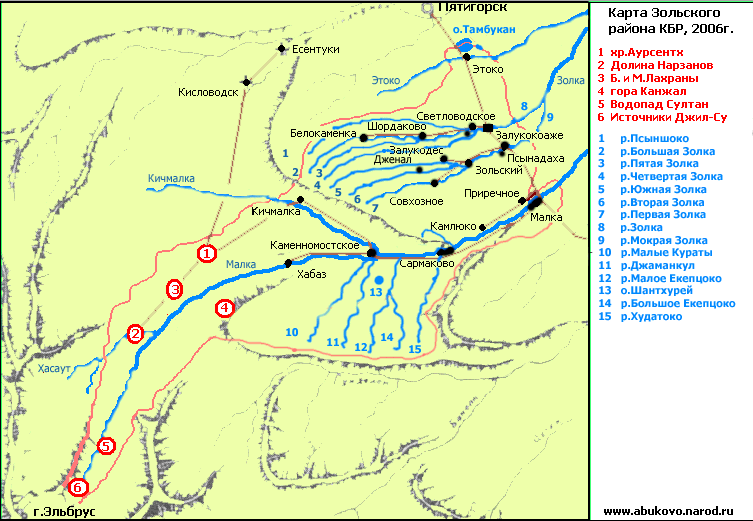
Map showing the Qenzhal Mountain (altitude 2,829 m), where the Qenzhal Battle
took place between the Kabardians and Crimean Tatars in September 1708.
It is “red no. 4”, located on the right bank of the Malka River (the upper reaches)
in the Dzeliqwe (Zolka) District of Kabarda.
The leader of the Kabardians was Prince Kwrghwoqwe the Great (son of Het’ox’wschiqwe; ХьÑÑ‚IÐ¾Ñ…ÑŠÑƒÑ‰Ñ‹ÐºÑŠÑƒÑ Ð¸ ÐºÑŠÑƒÑ ÐšÑƒÑ€Ð³ÑŠÑƒÐ¾ÐºÑŠÑƒÑ). A monument commemorating the decisive battle was erected on top of the Qenzhal Mountain in 1998 (later vandalized). In 2008, the Kabardians marked the 300th anniversary of the decisive battle. The Balkars, denying that such a battle had ever taken place and claiming that Qenzhal Mountain is within Balkar territory, blocked the route of a group of Kabardian horsemen who were heading to the battle scene from Nalchik, as part of the celebrations. However, good sense prevailed in the end, and the horsemen were able to reach their destination and they marked the important event in Circassian history. A monument will be erected on the Qenzhal Mountain to commemorate the Qenzhal Battle.
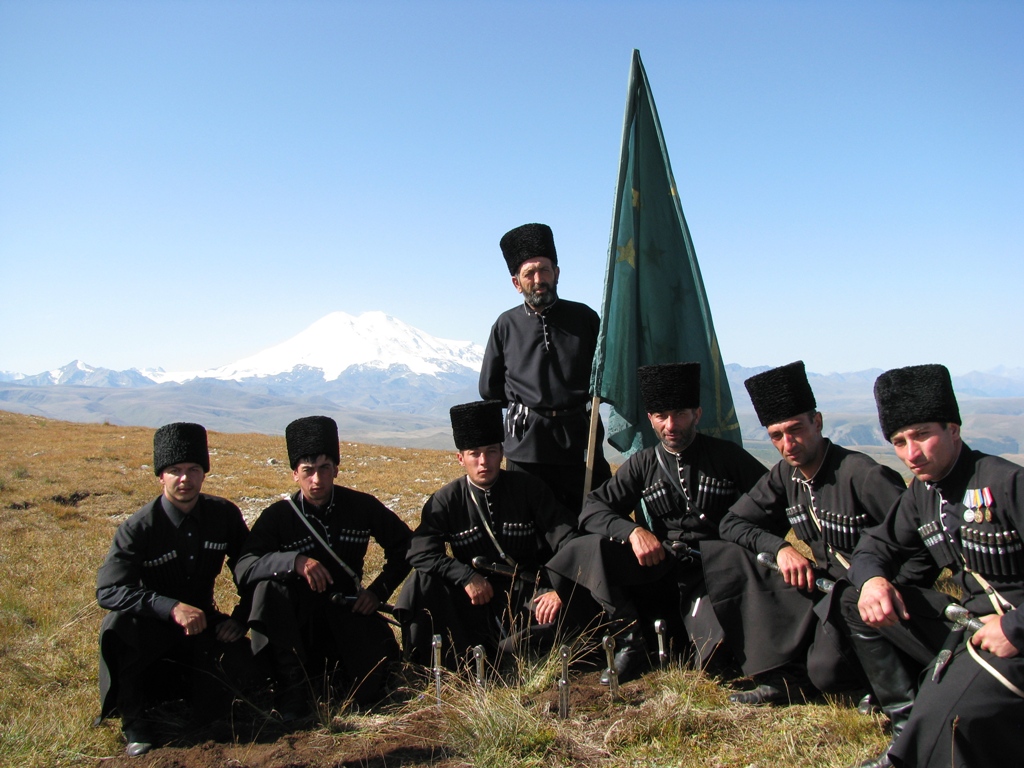
Circassian activists hoist the Circassian Banner on top of Qenzhal Mountain
on 17 September 2008 to mark the 300th anniversary of the triumph of the Circassians
against the combined forces of the Crimean Khan and the Ottomans.
Liz Fuller, a writer for Radio Free Europe/Radio Liberty attempted to deny the occurrence of this battle (“Duma Deputies Withdraw Support For Embattled Balkar Colleagueâ€, Radio Free Europe/Radio Liberty, 29 January 2009 [http://www.rferl.org/content/Duma_Deputies_Withdraw_Support_For_Embattled_Balkar_Colleague/1376446.html], in tune with her anti-Kabardian stance and her siding with the Balkars when covering events in Kabardino-Balkaria. There are many sources that refer to and document this historical and historic battle between the Kabardians and Tatars of the Crimea, for example: Khodarkovsky, M., “Of Christianity, Enlightenment, and Colonialism: Russia in the North Caucasus, 1550-1800â€, in “The Journal of Modern Historyâ€, vol. 71, no. 2, June 1999, pp 394-430. Available online (http://intersci.ss.uci.edu/wiki/eBooks/Articles/Russian%20Caucasus%201550-1800%20Khodarkovshy.pdf) (accessed 17 September 2013). This work sites a couple of works and sources, including Ukrainian historical archives, which show that this event did indeed take place in history. Khodarkovsky describes the Qenzhalischhe Battle on page 412.
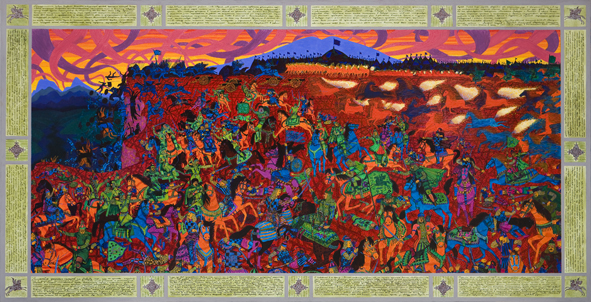
In September 2008 the Circassian artist Muhadin Ch’isch (КIыщ; Кишев)
unveiled an oil painting on canvas (150×300 cms) using “a fusion of abstraction and realism,
with echoes of the classical miniature style”, to commemorate the 300th anniversary of the Qenzhal Battle,
where the Kabardian people were victorious over the Tatars. You can view the painting in detail at: http://www.muhadinkishev.com/eng/news/5.htm
Written by Amjad Jaimoukha
http://circasvoices.blogspot.com/2013/09/the-epic-qenzhal-battle-between-east.html